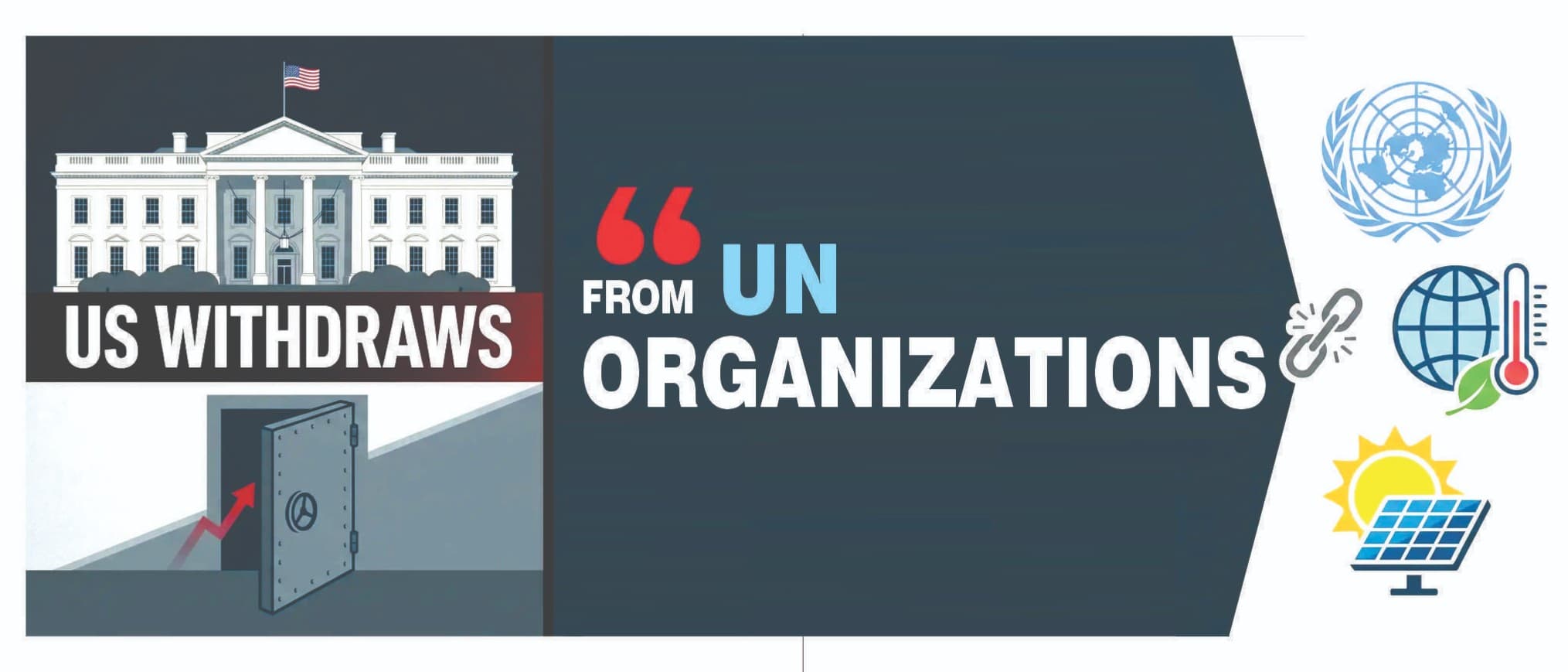
On January 7, 2026, President Trump withdrew the United States from 66 international organizations, as part of his administration's review of wasteful, ineffective and harmful international organizations. Nearly half of the 66 affected bodies are UN-related, including the Framework Convention on Climate Change - a treaty that underpins all international efforts to combat global warming. As well as the UNFCCC, the US has also withdrawn from the Intergovernmental Panel on Climate Change (IPCC) - the world's leading authority on climate science that pulls together the most respected reports on the science of rising global temperatures.
Groups working on development, gender equality and conflict - areas the Trump administration had repeatedly dismissed as advancing "globalist" or "woke" agendas - are also included. The memorandum stated that many of the organizations promoted "radical climate policies, global governance and ideological programs that conflict with US sovereignty and economic strength".
The United States will now initiate formal withdrawal procedures where required by treaty or institutional rules, and may identify further organizations for withdrawal as the review process continues.
Background
In February 2025, President Trump issued Executive Order 14199, calling for “a review of all international intergovernmental organizations of which the United States is a member and provides any type of funding or other support, and all conventions and treaties to which the United States is a party, to determine which organizations, conventions, and treaties are contrary to the interests of the United States and whether such organizations, conventions or treaties can be reformed.” The Secretary of State, in consultation with the UN Ambassador, was to conduct this astonishingly sweeping review in six months and then to “provide recommendations as to whether the United States should withdraw from any such organizations, conventions, or treaties.” This review was in addition to actions that the Trump administration took in 2025 to pursue withdrawal from the Paris Agreement, the World Health Organization, the UN Human Rights Council, UNESCO, and UNRWA.
The January 7 memo is the result of this review. More accurately, it is the first result of this review – the memo itself notes that Trump's “review of further findings of the Secretary of State remains ongoing.”
What these entities do – and why they matter
Here's a breakdown of the 31 UN entities mentioned in the memorandum, and how they are making a positive difference to people, communities and nations, worldwide.
a. African affairs
Office of the Special Adviser on Africa: Provides informed advice on the continent, ensures UN actions in the continent are coherent and aligned with people's needs.
Permanent Forum on People of African Descent: Aims to improve safety, quality of life and development of people of African descent, provides advice to the UN Human Rights Council.
b. Climate and environment
UN Collaborative Programme on Reducing Emissions from Deforestation and Forest Degradation in Developing Countries (UN-REDD): Provides technical assistance, policy guidance and financing for sustainable forest management.
UN Energy: Coordinates the work of 30 UN agencies and international organizations to promote access to affordable, reliable, sustainable and modern energy for all.
UN Framework Convention on Climate Change: The UNFCCC, which organizes the climate COPs or summits, is central to enabling international cooperation and ensuring transparency and accountability in tackling climate change.
UN Oceans: Strengthens UN collaboration on ocean issues such as the protection of marine ecosystems, promotion of sustainable ocean use and advancing global ocean governance.
UN Water: Coordinates work on water and sanitation issues and promotes the sustainable management of water resources.
c. Coordination
UN System Chief Executives Board for Coordination: Brings together the heads of UN organizations to ensure unified action on global challenges and the effective delivery of the UN's mandates.
d. Development
UN Habitat: Promotes sustainable towns and cities and provides technical and policy advice for the improvement of living conditions and the reduction of urban poverty.
e. Education and training
UN Institute for Training and Research (UNITAR): Provides training and capacity-building for individuals, organizations, and countries (especially developing nations) in areas like diplomacy, sustainable development, climate change and crisis management.
UN System Staff College: Equips UN personnel with learning, training and advisory services to ensure a capable, adaptable and collaborative UN workforce.
UN University: The UN's global think tank and postgraduate teaching organization conducts research and provides policy advice on pressing global issues.
Education Cannot Wait: The UN global fund dedicated to education in emergencies and protracted crises, to ensure that children and youth affected by conflict, displacement and disasters have access to safe, quality education.
f. Gender
UN Women: Works to eliminate discrimination against women and girls, promotes gender equality, and empowers women globally.
g. Health
UN Population Fund (UNFPA): Promotes sexual and reproductive health and rights for all, promotes gender equality and collates population data for development, helping to reduce maternal mortality and expand access to family planning.
h. International law
International Law Commission: Mandates the development and codification of international law by drafting legal instruments and clarifying principles; fostering the rule of law, and supporting peaceful relations among states.
i. Reducing conflict and violence
Office of the Special Representative of the Secretary General for Children in Armed Conflict: Leads global advocacy and monitoring to protect children affected by armed conflict.
Office of the Special Representative of the Secretary-General on Violence Against Children: Advocates globally to prevent and eliminate all forms of violence against children.
Office of the Special Representative of the Secretary-General on Sexual Violence in Conflict: Leads UN efforts to prevent and respond to conflict-related sexual violence by advocating for survivors, engaging with governments and armed groups to end violations, and promoting accountability.
Peacebuilding Commission: Support peace efforts in countries emerging from conflict by coordinating resources, providing strategic advice, and fostering partnership.
Peacebuilding Fund: Provides flexible funding for peacebuilding initiatives for the prevention of relapses into violence and the establishment of long-term stability and development.
UN Alliance of Civilizations: Promotes dialogue and cooperation among nations, cultures and religions to counter polarisation and extremism.
UN Register of Conventional Arms: Invites Member States to report annually on imports, exports and holdings of major conventional weapons, reducing the risk of armed conflict through greater openness in arms transfers.
j. Trade and the economy
Department of Economic and Social Affairs: Generates and analyses economic, social and environmental data, helping nations to address pressing development challenges.
Economic Commissions for Africa, Latin America and the Caribbean, Asia and the Pacific and Western Asia: These regional commissions provide policy guidance, facilitate intergovernmental dialogue and build capacity for sustainable and inclusive development.
International Trade Centre: Empowers small and medium-sized enterprises in developing and transitioning economies through trade and market intelligence, technical assistance and capacity building.
UN Conference on Trade and Development: Helps developing countries to integrate into the global economy by providing research, policy analysis, and technical assistance on trade, investment, finance, and technology.
Reasons behind the Withdrawal?
Sovereignty Concerns: Resistance to binding international rules perceived to constrain domestic policy autonomy.
Perceived Institutional Bias: Allegations of politicization, inefficiency, and bias against US or allied interests.
Domestic Political Pressures: Multilateral commitments viewed as costly with limited direct electoral benefits.
Burden-sharing Argument: Claim that the US contributes disproportionately to global institutions.
Strategic Reorientation: Preference for bilateral or minilateral arrangements over universal institutions.
Strategic Competition: Desire to limit platforms where rival powers gain influence.
Potential Impacts
Climate Change Setback: Weakens global efforts to curb greenhouse gas emissions and provides other countries an excuse to delay climate commitments and finance pledges.
Fragmentation of Multilateralism: Further erodes international governance, intensifies power rivalries and accelerates a shift towards protectionism and smaller, ad-hoc regional blocs.
Development & Humanitarian Slowdown: US funding cuts worsen already declining international development and humanitarian aid, affecting health, education, food security and SDG progress.
Global Peace & Security Risks: Reduced US support to bodies like the UN Peacebuilding Commission hampers peacebuilding and post-conflict recovery, especially in conflict-prone regions such as Africa and the Caribbean.
Weakening of Global Norms: Encourages selective compliance with international law and treaty obligations by other states.
Leadership Vacuum: Creates space for other major powers to shape global rules and institutions.
Conclusion
The decision reflects the Trump administration's à la carte approach to international organizations, selectively supporting only those operations and agencies that align with US objectives.
The move signals a retreat from sustained engagement with multilateral institutions that are seen as no longer serving immediate US interests.
It marks a further decline of the multilateral order and the erosion of rules-based global governance.
The protection of the rights and interests of the developing world and the Global South is likely to suffer as a result.
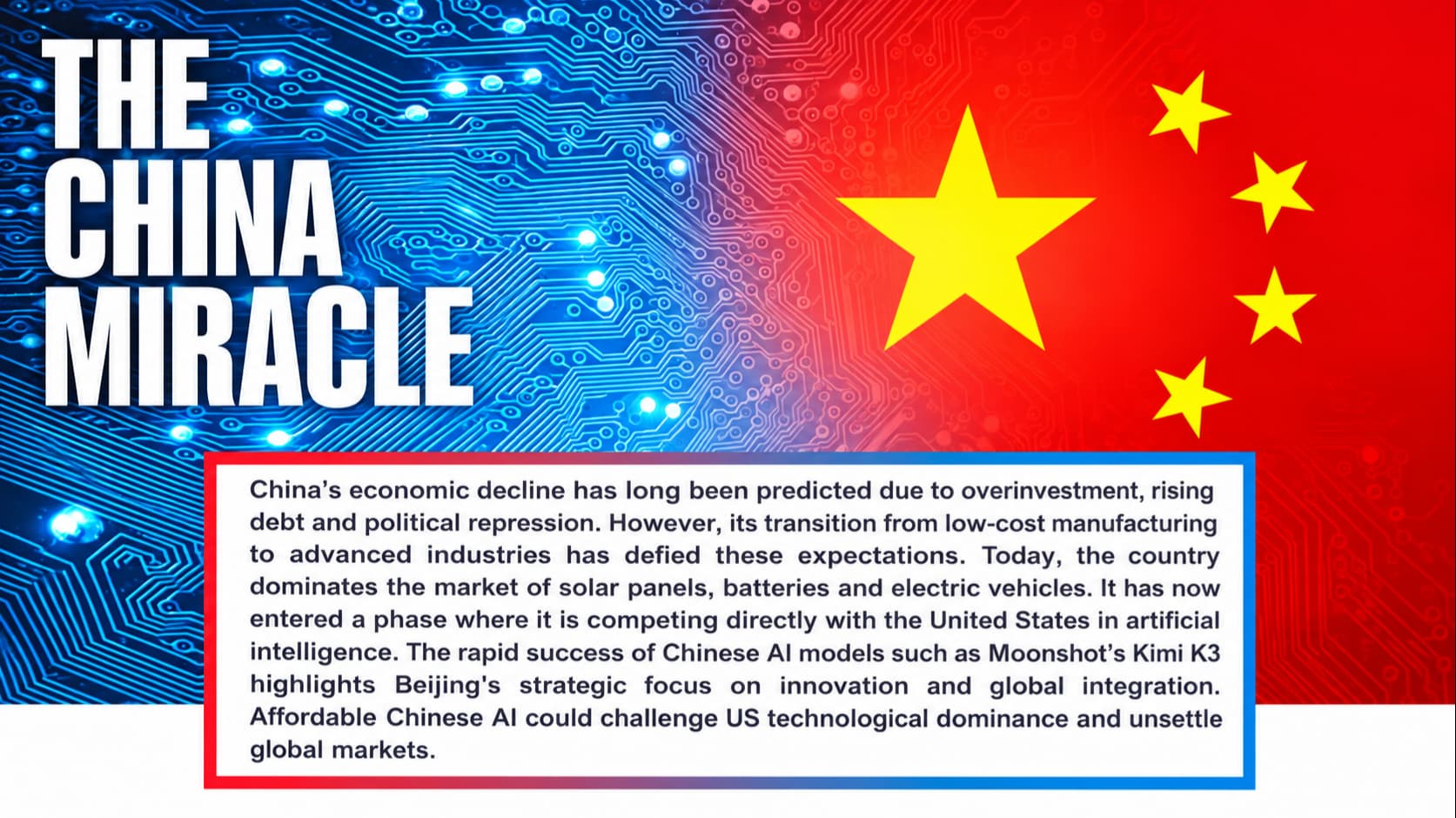
The decision also reveals US anxiety over its potential displacement as a global superpower by China.
It underscores concerns in Washington about the emergence of a new world order in which the US may have to accept reduced influence.
The move suggests that the US increasingly views the UN primarily as an instrument of geopolitical competition.
It signals an attempt to weaken or even dismantle multilateral mechanisms.
Such actions risk pushing the international system toward a “jungle order” where power, rather than rules, determines outcomes.
The writer is a professor of
International Relations.